
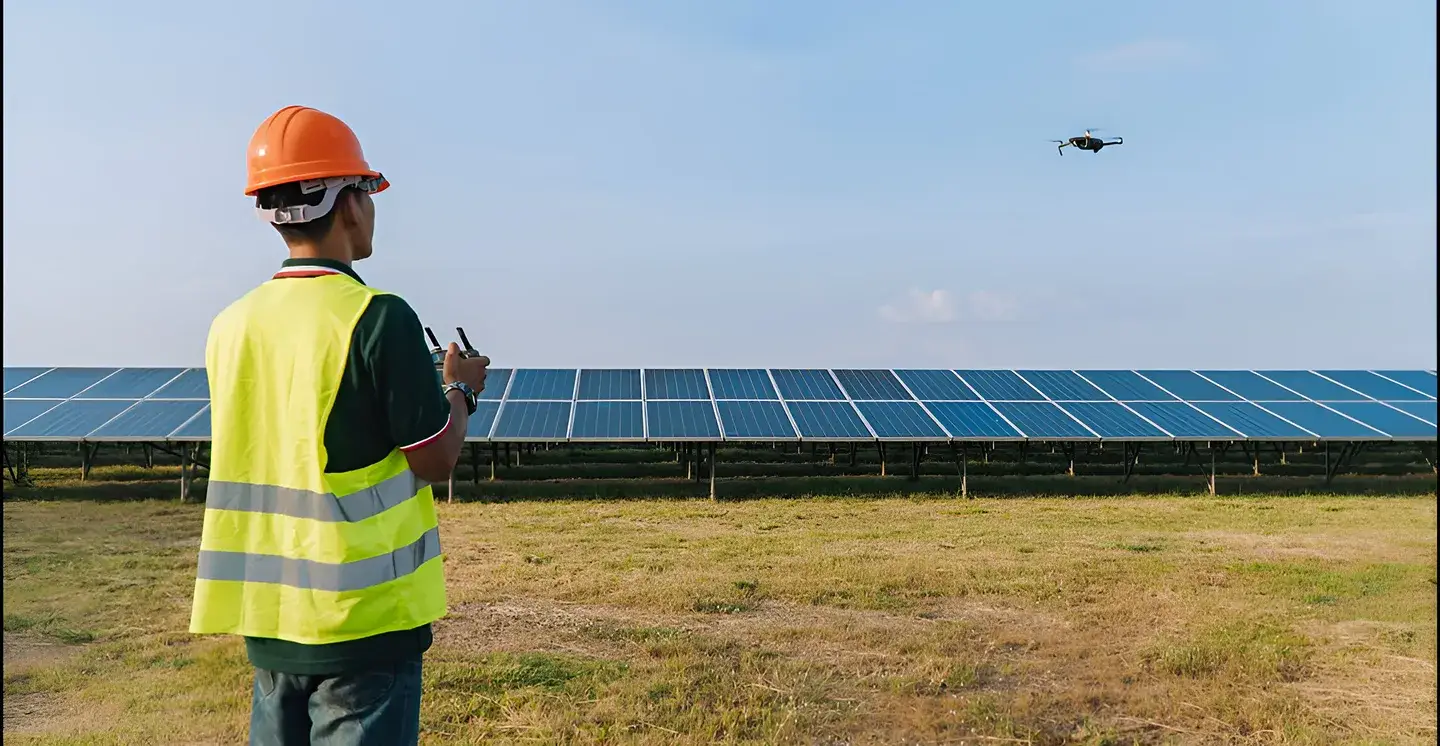
Drone Thermography
thermal imaging to detect temperature variations in solar panels, helping to prevent overheating and improve system efficiency.
What is drone thermography for solar plants?
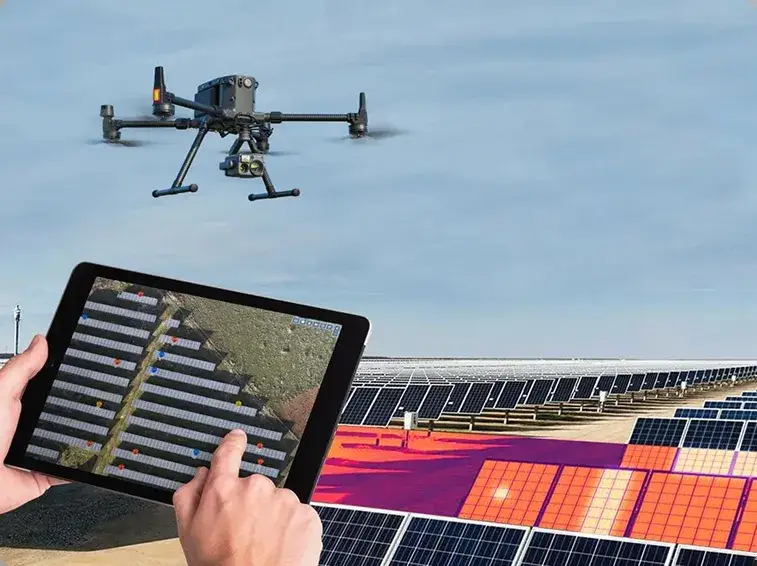
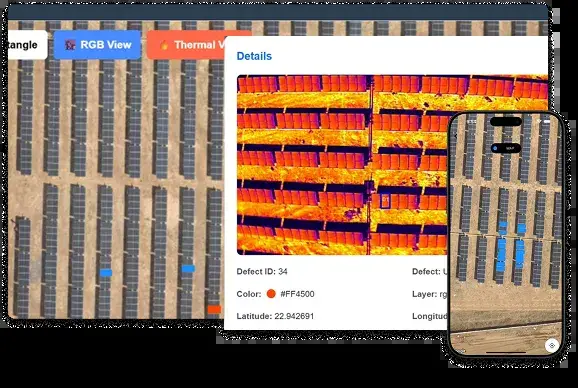
Drone thermography uses a drone with a thermal camera to scan a solar plant and find hot spots and faulty modules from the temperature differences between them. JSR Photonics uploads the thermal data to its web platform, marks each defect on the plant map, and delivers the location and temperature of every defect in an Excel report.
Service Highlights
IR Thermography inspection services are a cutting-edge solution that uses drones equipped with advanced thermal cameras to detect temperature anomalies. This innovative approach provides a safe, fast, and highly accurate way to identify a wide range of issues in various industries.
Our solution
Electroluminescence testing results accuracy depends on image quality and defect interpretation. JSR Photonics has developed industry’s leading software which provides EL test results similar to manufacturing plant EL images with clearly identified and marked defects for quick module identification at site.
Benefits Thermal Imaging
- Drones inspect solar farms faster, reducing time and labor cost.
- High-resolution data strengthens warranty claims on faulty modules.
- Thermal cameras detect hot spots and heating issues before visible damage occurs.
WHY
Partner With us
Quick deployment
Our team shall be mobilize within 48 Hrs of communication in most key locations in India, minimizing delays in production schedule
Reports on cloud
Report is filled on shop- floor during the inspection and is available to customer on their mobile app. No scatter mail communication, properly arranged all data on cloud for life long storage and quick availability
Leverage JSR Photonics’ proven expertise and independent approach to ensure the long-term performance and reliability of solar assets.
How is drone thermography different from a regular thermal camera photo?
A single thermal photo shows one spot at one moment. A drone inspection scans the whole plant systematically, and we combine the data into a thermal map on our web platform. Each defect is then marked on the map with its location and temperature, so you get one structured picture of the plant instead of scattered images.
Can I see the exact location of each defect?
Yes. We mark every defect directly on the plant map tile in our web platform. The platform gives the latitude and longitude of each marked defect, so your field team can go straight to the affected module without searching.
Is the defect detection manual or AI-based?
Defects are identified and marked by our analysts. After the drone data is uploaded to our platform and shown as tiles on a map, the analyst draws each defect on the tile, and the platform records its location and temperature. Because a person reviews and marks every defect, each finding is checked before it reaches your report.
What report do I receive after the inspection?
You receive an Excel report listing every marked defect with its latitude, longitude and temperature, along with the map view from our web platform. Excel lets your team sort, filter and share the findings and track repairs.
How do I know which hot spots to fix first?
Each defect in the report has its measured temperature and exact location. Defects that are much hotter than the surrounding modules need attention first, and you can sort the Excel report by temperature to build your repair list.
What problems can drone thermography find?
Hot spots, heating issues and under-performing modules, often before visible damage occurs. Early detection lets you repair or replace a module before it loses more output or becomes a safety risk.
What do I need to prepare before the inspection?
Share the plant location or site coordinates, the plant capacity, a layout of the plant if you have one, and a site contact person. The plant should be generating power during the flight, and clean modules give more reliable results. We confirm the full checklist with you beforehand.
Does thermography replace EL testing?
No, they find different things. Drone thermography scans a whole running plant quickly and finds heat-related problems. EL testing shows cell-level defects such as micro-cracks in individual modules. Many clients use both.